How to Identify Different Battery Types
Many people toss batteries without knowing what type they are, and that’s a big problem for recycling. When you can identify battery types like lead-acid or lithium, you help stop harmful materials from polluting the environment. This guide will show you how to spot each battery type and explain why it makes a real difference in keeping waste safe and sustainable.
Identifying Battery Types
Knowing the type of battery you’re dealing with is crucial for proper disposal. It not only aids recycling but also protects the environment from harmful waste. Let’s start with the basics of identifying batteries.
Lead-Acid Batteries: What to Look For
Lead-acid batteries are common in cars. They are usually large, heavy, and have two terminals on top. Look for labels indicating voltage, often around 12 volts. These batteries contain lead plates and sulfuric acid, which are dangerous if not handled correctly. Always wear gloves when inspecting them.
You might find lead-acid batteries in other places too, like motorcycles and boats. They usually have a plastic case and can be black or grey. Because of their size and weight, they’re easy to spot among other batteries. If you see any leaks or damage, handle them carefully and contact a professional recycler.
Spotting Lithium Batteries
Lithium batteries are often found in electronics. They’re smaller and lighter than lead-acid batteries. Look for them in laptops, phones, and cameras. They come in different shapes and sizes but usually have ‘Li-ion’ or ‘Lithium’ written on them.
They can be cylindrical or flat, and often have a metallic or plastic casing. Unlike lead-acid, they don’t leak if damaged, but they can still be hazardous. Never throw them in the trash. Instead, check for local recycling options.
Why Recycling Batteries Matters
Understanding why battery recycling matters is key. It’s not just about clearing clutter. It’s about safeguarding our environment and making a real difference in waste management.
Environmental Impact of Improper Disposal
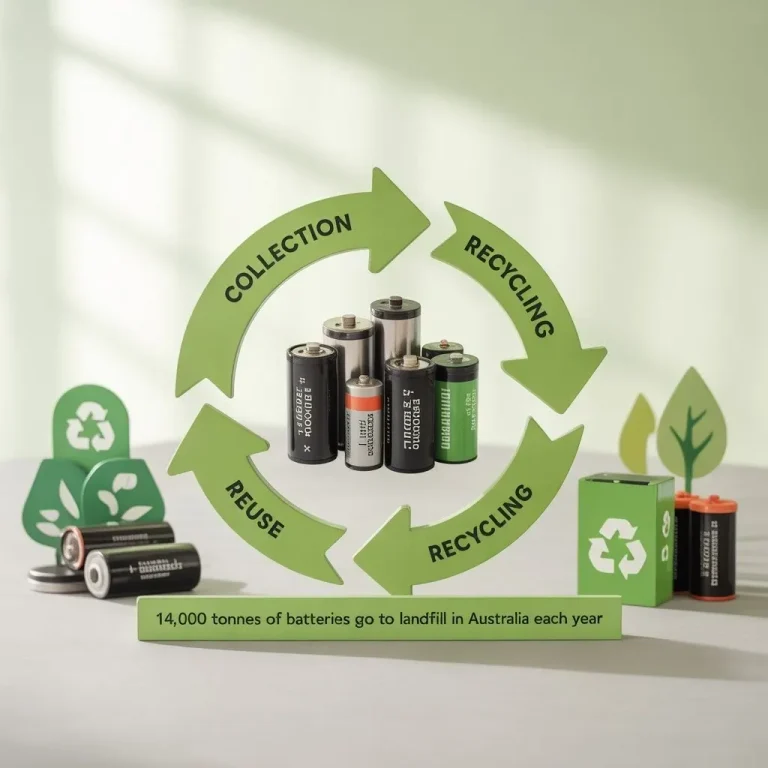
Improper disposal of batteries can lead to serious environmental damage. Batteries contain toxic metals like lead, mercury, and cadmium. If they end up in landfills, these metals can seep into the soil and water, harming wildlife and ecosystems. Shockingly, 90% of batteries in Australia are still not recycled, ending up in landfills.
When these toxic substances enter the environment, they can cause long-term harm. Plants and animals are affected, and it eventually reaches humans through the food chain. By recycling, you prevent this chain of events.
Sustainable Waste Management Practices
Effective recycling is a step towards sustainable waste management. It reduces the need for new raw materials, saves energy, and lowers greenhouse gas emissions. By disposing of batteries correctly, you support the creation of new products from recycled materials.
Communities benefit too. Recycling programs create jobs and encourage eco-friendly practices. When you recycle, you’re part of a larger movement towards sustainability. You’re not just disposing of waste; you’re helping build a cleaner future.
How to Recycle Responsibly
Recycling responsibly ensures that your efforts make the greatest impact. It’s about knowing where to go and who to trust with your used batteries.
Lithium Battery Disposal Tips
For lithium batteries, find a certified recycling centre. Many electronics stores offer take-back programs. Remove batteries from devices before recycling them. If they’re damaged, handle them with care and place them in a non-conductive container.
Recycling lithium batteries helps recover valuable materials like cobalt and lithium. This not only conserves resources but also reduces the environmental footprint of mining. By choosing to recycle, you’re contributing to a cycle of resource sustainability.
Community Drop-Off Events and Partnerships
Community drop-off events are great opportunities for responsible recycling. They’re often organised by local councils or community groups. Look for events in your area and take advantage of them.
These events are often part of larger sustainability partnerships, involving local businesses and recycling services. Participating helps build community awareness and encourages others to recycle. You’re not just disposing of batteries; you’re joining a collective effort for a greener planet.
By understanding and acting on these insights, you’re not only protecting the environment but also contributing to a sustainable future. Your actions can inspire others to join the cause. Remember, every battery recycled is a step towards a cleaner, safer world.